Boston is one of the most historically dense cities in the United States, and this Boston travel guide breaks down what’s actually worth your time.
This isn’t a place where you visit one or two landmarks and move on. The entire city feels like a historical site that just happens to still function as a modern city.
Old brick buildings, Revolutionary War landmarks, and burial grounds sit right next to glass skyscrapers and office towers. You can walk past something that’s over 300 years old and then grab coffee in a modern building 30 seconds later.
And unlike most major cities, Boston is actually walkable.
If you plan your route right, you can cover most of the major sites on foot without needing to constantly jump in a car or rideshare.
Boston Travel Guide: What Boston Actually Feels Like
Boston feels compact, layered, and constantly moving.
The streets are tight. The layout doesn’t always make sense. You’ll turn a corner and suddenly be in a completely different part of the city without realizing it.
That’s part of the experience.
It’s not clean and organized like newer cities. It’s older, tighter, and built before anyone cared about straight lines or easy navigation.
But that’s also what makes it work.
Boston Travel Guide: The Freedom Trail (Start Here)
The backbone of Boston is the Freedom Trail.
This is the easiest way to experience the city’s history without overthinking it.
The trail runs about 2.5 miles, starting at Boston Common and ending across the Charles River at the Bunker Hill Monument in Charlestown.
You don’t need a guide. You don’t even need a map.
A red brick line embedded in the sidewalk literally leads you the entire way.
Just follow it.
Boston Travel Guide: What You’ll See Along the Trail
As you walk the Freedom Trail, you’ll pass some of the most important historical sites in the country.
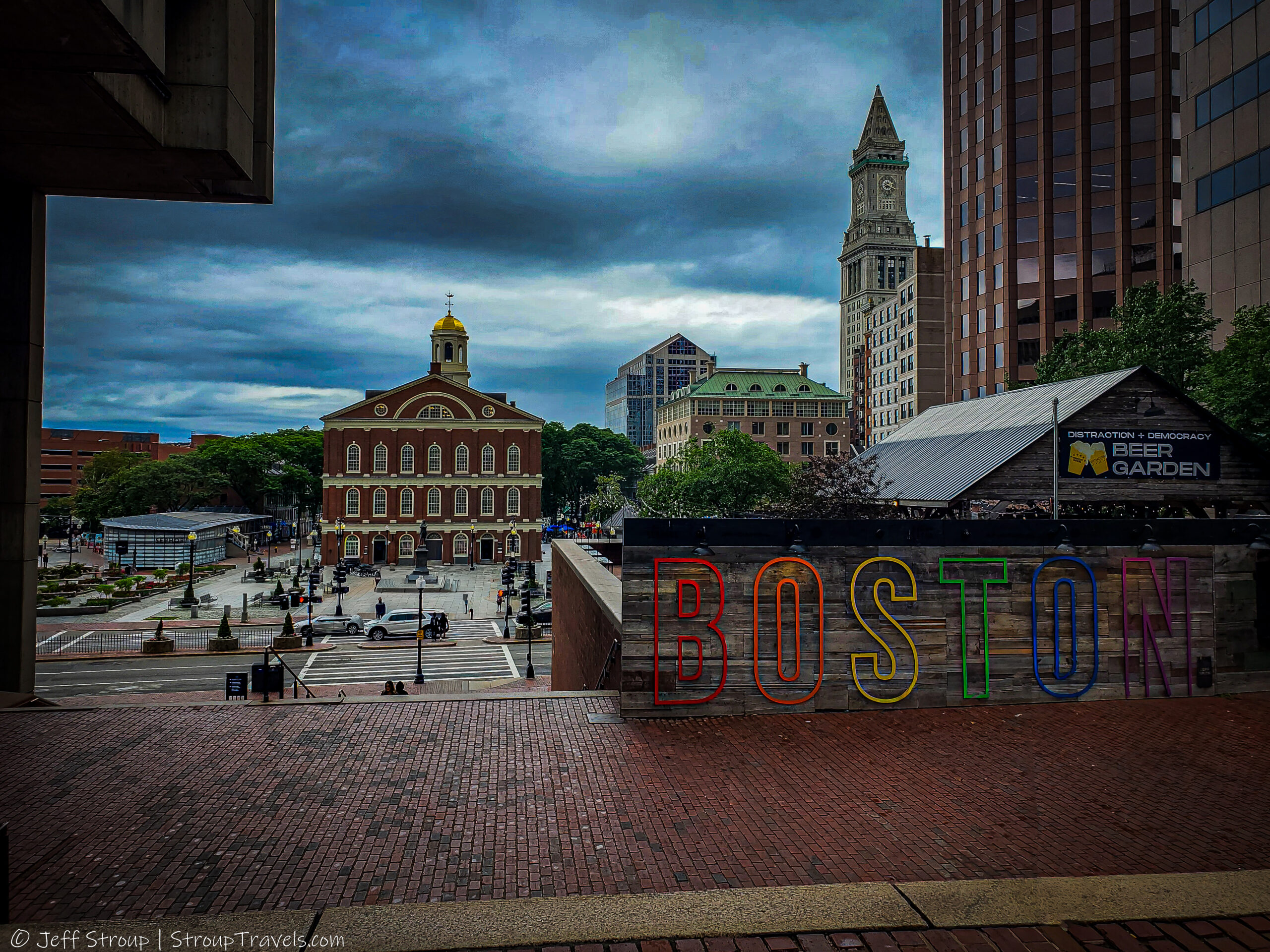
Faneuil Hall is one of the more crowded stops, but it’s worth seeing. This is where speeches and public gatherings helped shape early American resistance.
The Old State House is another key stop, sitting right in the middle of modern traffic, which makes the contrast even more noticeable.
At the Old South Meeting House, you’re standing in a place where the Boston Tea Party was organized.
Then there’s the Paul Revere House, one of the oldest surviving structures in the city.
And just steps away from the trail, you’ll find Granary Burying Ground, where Samuel Adams, Paul Revere, and other key figures are buried.
This isn’t staged history. It’s right there in front of you.
Boston Travel Guide: Finishing the Trail (Charlestown)
Once you cross into Charlestown, the trail ends strong.
The Bunker Hill Monument marks one of the first major battles of the Revolutionary War.
From there, you can walk over to the USS Constitution at the Charlestown Navy Yard.
This ship is still active and holds the title of the oldest commissioned warship afloat in the world.
It’s a solid way to wrap up the trail.
Boston Travel Guide: Chinatown (Quick but Worth It)
Just a few blocks from Boston Common, you’ll hit Boston Chinatown.
It’s a completely different feel from the rest of the city.
Bright red gates, dense streets, packed restaurants, and the kind of energy that pulls you in immediately. If you’re walking all day and need a break, this is a good spot to grab food and reset.
You don’t need to spend hours here. It’s more of a quick detour that adds variety to the day.
Boston Travel Guide: North End (Food + Atmosphere)
If you stay on the Freedom Trail heading toward the waterfront, you’ll end up in Boston’s North End.
This is the city’s historic Italian district, and it feels completely different from everything you just walked through.
The streets get tighter. The restaurants get louder. And the smell of garlic and pizza follows you around every corner.
One of the most well-known stops here is Regina Pizzeria.
It’s not overhyped. It actually delivers.
Old-school interior, long lines, and classic Boston pizza. You’ll know you’re in the right place the moment you see the crowd outside.
Full food breakdown coming soon
Boston Travel Guide: Other Food Worth Trying
Boston isn’t a “food city” in the same way as New York or Chicago, but there are still some standout spots.
Sam LaGrassa’s is one of them.
It’s expensive. No way around it.
But the sandwiches are stacked, loaded, and actually worth trying at least once.
Read: Sam LaGrassa’s Boston Review: Really Worth $30?
Boston Sports and Culture
Boston doesn’t play around when it comes to sports.
Fenway Park is one of the biggest draws in the city. It’s one of the oldest ballparks in Major League Baseball, and you feel that history the second you walk in.
Even if you’re not a baseball fan, it’s worth seeing.
Tours are available and usually start around $20, but they sell out fast.
For basketball and hockey, head to TD Garden, home of the Celtics and Bruins.
Cheers Bar (Quick Stop for TV Fans)
If you’re a fan of classic TV, you’ll probably recognize Cheers Beacon Hill.
This is the bar that inspired the sitcom Cheers. The exterior is the iconic one you’ve seen in the show, and it sits right near Boston Common, so it’s an easy stop while you’re already exploring the area.
I didn’t go inside, but honestly, most people stop for the photo and move on.
Inside, it’s more of a themed experience than a historic bar. If you’re a big fan of the show, it’s worth stepping in. If not, snap the picture and keep it moving.
Getting Around Boston
Driving in Boston is a mistake.
The streets are tight, the layout is confusing, and traffic never really stops. If you’re staying downtown, skip the rental car completely.
Boston’s subway system, the MBTA, is actually solid.
It’s not perfect, but it gets you where you need to go and connects most major areas. It’s also the easiest way to get from the airport into the city.
The best way to explore Boston is simple:
Walk + subway.
That’s it.
Where to Stay in Boston
If you want to stay right in the middle of everything, Omni Parker House is one of the most historic options.
This place has been around for over a century and has hosted politicians, writers, and major historical figures.
Location-wise, it’s perfect. You’re within walking distance of the Freedom Trail, Boston Common, and most major sites.
But it’s not perfect.
It’s old. Rooms can feel small. If you’re traveling with multiple people or want something modern, you may want to look elsewhere.
Still worth seeing, even if you don’t stay.
Inside, you’ll find The Last Hurrah, which is a solid spot to grab a drink or quick bite.
How Long Do You Need?
You can cover the core of Boston in 1–2 days.
Day 1:
- Freedom Trail
- North End
- Chinatown
Day 2:
- Fenway or TD Garden
- extra exploring
Anything beyond that depends on how deep you want to go.
Is Boston Worth Visiting?
Yes.
Especially if you’re into:
- American history
- walkable cities
- layered urban environments
It’s one of the few cities where you’re constantly moving between past and present without trying.
Quick Questions
Is Boston walkable?
Yes. One of the most walkable major cities in the U.S.
How long do you need in Boston?
1–2 days for the main highlights.
What is the Freedom Trail?
A 2.5-mile walking path that connects Boston’s most important historical sites.
Is Boston worth visiting?
Yes. Especially for history and city exploration.
Stroup Verdict
Travel Time Worth It?
☆☆☆☆⭑
Time Needed:
1–2 days
Crowd Tolerance Needed:
High in peak areas
Photogenic?
Yes
Would I Go Back?
Yes
Who Should Skip It?
Anyone who hates cities or crowds
Final Thoughts
Boston doesn’t try to be flashy. It just stacks history on top of itself and lets you walk through it. You’re not checking off attractions here. You’re moving through a timeline.
And that’s what makes it work.
Traveling beyond Boston? Massachusetts Travel Guide: Boston History and Coastal Stops