Exploring Iceland is not cheap. It is not casual, it is not a “wing it and see what happens” destination, it is raw landscape at a national scale.
This was my second international trip and my first solo journey abroad. I had four days. That was mistake number one. But even in four days, exploring Iceland felt bigger than the time I had to give it.
I focused on the southeastern stretch from Keflavík through Reykjavík and down toward the black sand beaches and waterfalls. And even staying regional, I barely scratched the surface.
If you’re building a trip here, understand this early: Iceland is about terrain. Not cities. Not nightlife. Terrain.
Exploring Iceland Solo: Is It Safe?

Yes.
Iceland is one of the safest countries I’ve ever stepped foot in. Driving alone, hiking alone, walking Reykjavík at night alone, zero issues. The country feels calm, structured, and functional.
That does not mean careless.
Weather shifts quickly. Wind is real. Remote stretches are actually remote. If you’re heading off the main roads, you need to tell someone your plan and check conditions. But for solo travel? Iceland is one of the strongest international first-solo-trip options out there. Car rental companies have a warning label to hold car doors when exiting for a reason.
I stayed in Reykjanesbær near Keflavík, which made airport logistics easy but limited nightly variety. If I did it again, I’d move accommodations at least once.
The Cost of Exploring Iceland
Let’s not pretend. Iceland is expensive.
Food. Gas. Hotels. Everything.
You feel it immediately.
But exploring Iceland on a budget is possible if you shift your mindset. Camper vans are everywhere for a reason. You’ll see them constantly. It combines transportation and lodging into one expense.
Groceries help. Dining out every night will wreck your budget fast. And when paying by credit card, always choose the local currency to avoid unnecessary conversion fees. The cost hurts. The landscape makes you forget.
Exploring Iceland’s Reykjanes Peninsula
Your trip begins the moment you land at Keflavík International Airport.
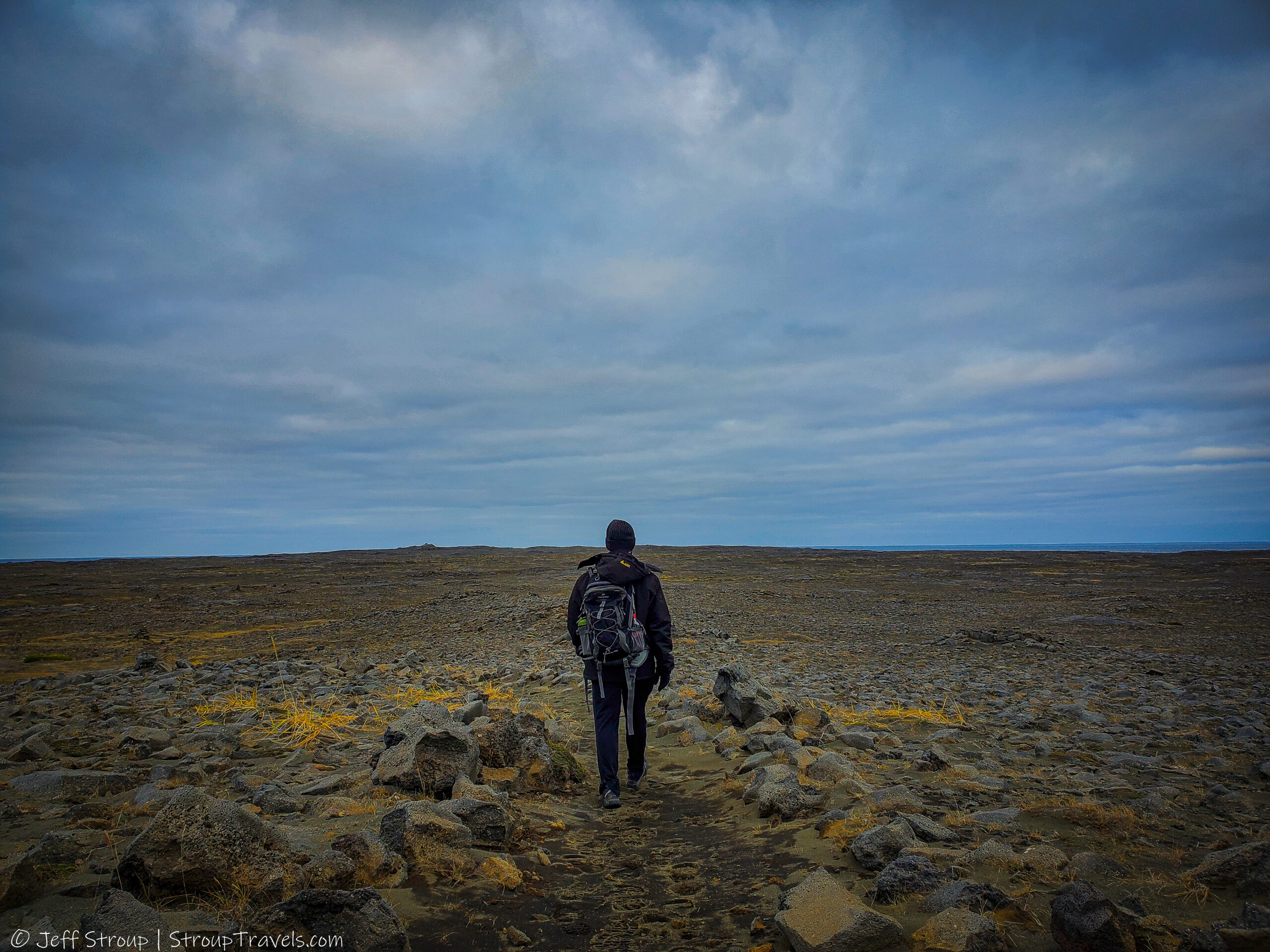
The Reykjanes Peninsula looks like another planet. Lava fields stretch endlessly. Steam vents cut through the ground. And then you reach the symbolic divide at Bridge Between Continents, where the North American and Eurasian tectonic plates meet.
It’s touristy, symbolic, and still cool.
This region feels volcanic and unsettled. Less green. More black rock and geothermal energy. It’s a solid first half-day without driving deep into the island.
Full breakdown of Rekjanes coming soon.
Reykjavík: Compact and Easy
Reykjavík is not a massive capital city. It’s walkable, clean, and colorful. You can cover the core downtown in a day, that’s what I did. Churches, waterfront views, street art, small cafes. It’s pleasant. But Reykjavík is not why you fly to Iceland. It’s a staging ground between natural stops.
Still worth seeing. Just don’t overestimate it.
Reykjavík breakdown coming soon.
Exploring Iceland’s Waterfalls and Black Sand
This is where Iceland shifts from interesting to unforgettable.
Seljalandsfoss and Skógafoss are not subtle. They’re massive, loud, and powerful. You feel them in your chest.
You’ll see tourists. You’ll see camera tripods. But you’ll also see scale that photos don’t capture properly.
Then there’s Reynisfjara Black Sand Beach.
The sand is black. The basalt columns look engineered. The Atlantic crashes violently. This is not a swimming beach. It’s dramatic and slightly intimidating. Stay aware of the waves. They’re not casual.
Exploring Iceland’s southern stretch is where the “fire and ice” cliché actually makes sense.
More insight into the Southern region coming soon.
Exploring Iceland’s Golden Circle and Þingvellir Region
If you only have a few days exploring Iceland, the Golden Circle is the most efficient concentration of power per mile.
This loop hits geothermal explosions, tectonic drama, and massive waterfalls without needing a 4×4 or extreme planning. In October, traffic was low. Wide stretches of empty road. Wind. Silence. Landscapes that feel untouched.
Þingvellir: Where the Earth Literally Splits
Þingvellir National Park is not just a park. It’s geology and politics layered together. This is where the North American and Eurasian plates pull apart visibly, and where Iceland’s parliament was established over 1,000 years ago.
You can walk between continents. The rock formations are jagged and raw. The space feels open and exposed in a way that photographs struggle to capture.
Nearby, Öxarárfoss cuts through the rock formations with clean vertical force. It’s not the tallest waterfall in Iceland, but the surrounding terrain makes it hit harder. The stone walls, the gray sky, the wind. It feels ancient.
This entire region deserves its own deep dive later.
Strokkur and the Geothermal Power Show
Strokkur is not subtle. It erupts every few minutes. You stand there watching the water bubble and inflate like a breathing organism, and then it detonates straight up.
Catching one mid-eruption is satisfying. You feel the heat in the air. It reminds you Iceland is still active. Still unstable beneath the surface.
It’s tourist-heavy compared to remote stops, but it earns the attention.
Gullfoss and the Sigríður Story
Gullfoss is scale again. Two-tiered. Wide. Aggressive. It doesn’t politely cascade. It drops hard into a canyon.
There’s also the story of Sigríður Tómasdóttir, who fought to protect the falls from being developed for hydroelectric power. That backstory adds weight to the visit. It’s not just scenery. It’s preservation.
Gullfoss is one of those places where you don’t need to talk. Just stand there and feel the mist hit your face.
The Lesser-Talked Stops
Hrafnagjá Observation Deck offers a quieter vantage point over fractured terrain. Not crowded. Just layered rock and open sky.
Fossabrekkur and Langistígur add to that feeling of isolation. Pull off. Walk a bit. Look around. You’re not elbowing through crowds. You’re just standing in wide, empty space.
That’s the part of exploring Iceland I didn’t expect to hit as hard as it did. The emptiness. The low traffic. The sense that you can just stop and breathe without someone stepping into your frame.
Icelandic Food: Worth It or Overhyped?
Seafood dominates. Lamb is common. Prices are high.
If you want specifics, I broke down meals separately:
Hákarl exists. You can try it. I did. Questionable decisions were made, no regrets. I can say I tried it. Icelandic dining isn’t revolutionary. It’s solid, clean, and expensive.
Getting Around Iceland
Renting a car is the move. I used Blue Car Rentals and had zero issues.
Buses exist. Tours exist. But exploring Iceland without a car limits freedom.
Roads are well maintained near major routes. Wind can be aggressive. Speed limits are strict. Pay attention.
If you plan to access highland roads, you’ll need a proper 4×4 and seasonal awareness. Not all routes are accessible year-round.
My Three Mistakes Exploring Iceland
- Only going for four days.
- Staying in the same hotel the entire time.
- Not seeing the Northern Lights.
That last one still stings.
They’re not guaranteed. They’re weather dependent. But if you’re exploring Iceland during aurora season and you don’t at least try, you’ll regret it.
I will not make that mistake again.
Is Exploring Iceland Worth It?
Yes, every penny.
But not for everyone.
If you need nightlife, structured entertainment, or luxury resorts stacked together, this isn’t your place.
If you want landscapes that feel prehistoric, violent oceans, massive waterfalls, lava fields, and the constant reminder that the earth is still active, this is it.
Exploring Iceland feels like stepping into terrain that does not care about you.
And that’s the appeal.
Traveler’s Checklist: Exploring Iceland
- Bring waterproof layers.
- Bring gloves even in shoulder seasons.
- Budget more than you think.
- Rent a car.
- Watch the wind forecast.
- Do not turn your back on the ocean at Reynisfjara.
- Move accommodations if staying more than 4 days.
Quick Questions About Exploring Iceland
Is Iceland safe for solo travel?
Yes. One of the safest countries I’ve visited.
Is four days enough?
No. It’s enough to sample, not explore fully.
Is Iceland expensive?
Yes. Plan accordingly.
Do you need a car?
If you want flexibility, absolutely.
Is Reykjavík worth visiting?
Yes, but it’s not the main event.
Stroup Verdict
Drive Time Worth It: International flight required
Time Needed: 6–10 days ideal
Crowd Tolerance: Moderate at major sites
Photogenic: Off the charts
Would I Go Back: ABSOLUTELY
Who Should Skip: Travelers who need constant entertainment
Exploring Iceland is not about checking landmarks off a list. It’s about feeling small in the presence of active geology. And I’m going back, hopefully soon, to explore the rest of country..
I track every stop in Iceland, good or bad, on my custom-curated Google Map. It’s how I plan trips and share recommendations. Blue pins = planned spots. Green = verified and reviewed. You can view it here:
🔗 Explore the Map