Manassas National Battlefield Park marks the location of the first major battles of the American Civil War. Standing on these fields today, it is difficult to imagine how quickly this quiet Virginia countryside turned into one of the war’s earliest and most chaotic battle zones. Manassas National Battlefield Park preserves the site of the First and Second Battles of Bull Run in northern Virginia.
Located about an hour outside Washington D.C., Manassas preserves the ground where Union and Confederate forces collided during the First and Second Battles of Bull Run. Today the park is peaceful farmland and wooded trails, but the events here set the tone for a conflict that would reshape the entire country.
Visitors can explore the battlefield through a self-guided driving tour, walking trails, and preserved landmarks that still stand where soldiers fought more than 160 years ago.
This was one of the first places I visited when I started traveling to historic sites. Unlike my first visit, make sure you begin at the visitor center. Many markers and exhibits near the building help set the stage before you head into the battlefield.
Manassas National Battlefield Park: First Battle of Bull Run
The First Battle of Bull Run shocked both sides of the conflict. Many believed the war would end quickly. Instead, the battle at Manassas revealed how brutal and unpredictable the war would become.
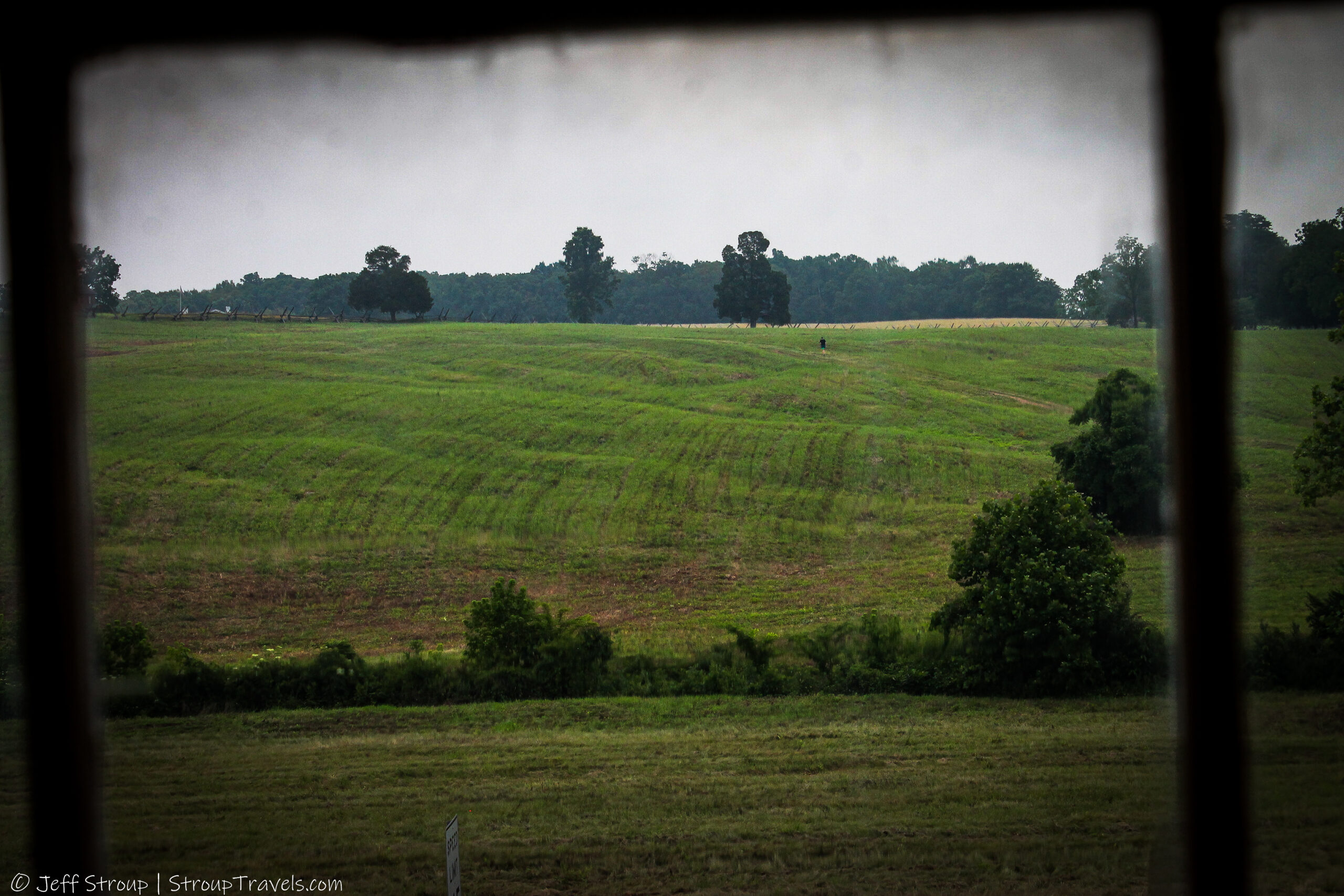
Fighting spread across open farmland, ridges, and wooded areas that visitors can still walk today.
Manassas National Battlefield Park: Second Battle of Bull Run
Just over a year later, the armies returned to the same fields for the Second Battle of Bull Run. Confederate forces again pushed Union troops back toward Washington, confirming that the war was far from over.
Standing in these same areas today makes it easier to understand how important terrain was during the battle.
Manassas National Battlefield Park: Henry Hill
Henry Hill is one of the most important locations in the entire park.
This is where Confederate General Thomas Jackson earned the nickname “Stonewall” after holding the line against repeated Union attacks. Today the hill contains several monuments and open views of the surrounding battlefield.
Manassas National Battlefield Park: Stone House
The Stone House is one of the most recognizable structures at Manassas. The building served as a field hospital during the battle.
Inside, you can still see initials carved into the floor on the second level. It sits near a busy intersection today, but during the battle this area was filled with wounded soldiers.
There is a small parking area nearby if you want to stop and walk around the house.
Manassas National Battlefield Park: Driving Tour
Manassas may not look massive at first, but the battlefield covers a large area. The best way to experience it is through the self-guided driving tour.
Major stops include:
- Henry Hill
- Stone Bridge
- Brawner Farm
- Deep Cut
- Matthews Hill
You can move at your own pace and stop wherever something catches your attention.
Plan for 2–3 hours minimum if you want to explore properly.
Walking the Manassas National Battlefield
There are numerous trails throughout the park if you want to explore beyond the driving tour.
Some visitors treat Manassas as a hiking destination as much as a historic site. The terrain shifts between open fields and wooded areas, helping you understand how chaotic the fighting became.
If you plan to walk the trails:
- Bring water
- Wear good shoes
- Expect uneven ground in some areas
Manassas Battlefield Visitor Center
Start here if you want context before exploring the battlefield.
Inside you’ll find:
- Museum exhibits
- Battle maps
- A short film presentation
- Park information
It’s the easiest way to understand the scale of the battles before heading out to the fields.
What Makes Manassas Different From Other Civil War Battlefields
Manassas feels different from places like Gettysburg or Antietam. Those battlefields are massive and often surrounded by tourism infrastructure. Manassas sits much closer to modern development. Roads, neighborhoods, and intersections exist right next to ground where soldiers fought.
That contrast makes the battlefield feel almost surreal at times.
You can stand on Henry Hill looking across open farmland, then drive a few minutes and find yourself sitting at a busy intersection near the Stone House. It reminds you that history does not always stay frozen in time. The battlefield exists within the modern world rather than being completely isolated from it.
Despite the surrounding development, the park itself still preserves large sections of the original terrain. Fields, wooded areas, creeks, and ridges remain largely unchanged from the time of the battles. Walking through these areas gives visitors a clearer understanding of how chaotic the fighting must have been.
Best Time to Visit Manassas National Battlefield Park
Manassas is open year-round, but some seasons are far better than others.
Spring and fall are the most comfortable times to visit. The temperatures are mild, and the surrounding landscape looks great for photography. Fall especially adds a different atmosphere to the battlefield when the trees begin to change color.
Summer visits can be hot and humid. Large portions of the battlefield are open fields with very little shade, which makes long walks uncomfortable during the middle of the day.
Winter can actually be a great time for history enthusiasts. The lack of foliage makes it easier to see the layout of the battlefield and understand how the terrain influenced the battles.
If possible, try visiting early in the morning or later in the afternoon. Not only are temperatures better, but the battlefield also tends to be quieter during those hours.
Tips for Visiting Manassas Battlefield
A few simple tips can make a visit much smoother.
Start at the visitor center. The museum and short film provide helpful context before you begin exploring. It is much easier to understand the battlefield once you know the basic timeline of events.
Follow the driving tour route. The tour connects the most important locations and keeps you from missing key parts of the battlefield.
Take your time at the stops. Many visitors rush through the park, but the monuments and information plaques contain a lot of detail about what happened in each location.
Wear comfortable shoes. Even if you plan to drive most of the tour, you will likely end up walking across fields or along short trails at several stops.
Bring water during warmer months. Much of the park is exposed farmland with very little shade.
Photography at Manassas Battlefield
Manassas is also a great location for photography.
The battlefield’s open fields and rolling terrain create wide scenic views that are especially impressive during sunrise and sunset. The early morning light across the fields near Henry Hill can be particularly dramatic.
Historic structures like the Stone House also make interesting subjects. Because the house sits near a modern road intersection, it creates a unique contrast between past and present.
During fall, the wooded sections of the battlefield add color that completely changes the atmosphere compared to the rest of the year.
Even if you are not a serious photographer, it is worth bringing a camera…wait, who am I kidding, just about everyone carries a camera now. The peaceful landscape makes it easy to forget that these quiet fields once witnessed intense fighting.
Pairing Manassas With Other Historic Sites
Manassas works well as part of a larger Civil War road trip through the Mid-Atlantic region.
Within a few hours’ drive, visitors can reach several of the most important Civil War locations in the country.
Harpers Ferry offers a mix of Civil War history and one of the most scenic small towns in the region. Antietam National Battlefield marks the bloodiest single day in American history. Gettysburg preserves the site of the war’s most famous battle.
Combining these locations into one trip creates a deeper understanding of how the war unfolded across the region.
Even if you only have one day available, Manassas is one of the easiest Civil War sites to reach from Washington D.C., making it a convenient historical stop during a trip to the capital.
Just over an hour away, you can stand at the birthplace of George Washington, tying together the beginning of the nation with the conflict that nearly tore it apart.
Quick Q&A
How long does it take to visit Manassas National Battlefield Park?
Most visitors spend 2–4 hours exploring the driving tour and visitor center. History enthusiasts can easily spend half a day walking the battlefield.
Is Manassas Battlefield worth visiting?
Yes. It marks the location of the first major battles of the Civil War and is one of the most historically important preserved battlefields in the country.
Can you drive through Manassas Battlefield?
Yes. The park includes a self-guided driving tour connecting the major historical locations across the battlefield.
Is Manassas close to Washington DC?
Yes. The battlefield sits about 35–40 miles from Washington D.C., making it an easy day trip.
Nearby Civil War Sites
If you are exploring Civil War history in the region, several major locations are nearby.
- Harpers Ferry
- Antietam National Battlefield
- Gettysburg National Military Park
- Cedar Creek and Belle Grove National Historical Park
Drive Time Worth It?
From Washington DC
Absolutely. One of the easiest Civil War sites to visit from the capital.
From Baltimore
About 90 minutes. Worth combining with Harpers Ferry or Antietam.
From Gettysburg
Roughly two hours. Better as part of a larger Civil War road trip.
Final Thoughts
Manassas National Battlefield Park may not have the scale of Gettysburg, but its importance in Civil War history is undeniable. The battles fought here shattered early expectations that the conflict would end quickly and showed the country just how destructive the war would become.
Today the battlefield is quiet farmland, scattered monuments, and winding trails. Visitors can walk the same ground where soldiers once fought while gaining a deeper understanding of how the war began.
Whether you are interested in history, hiking, or simply exploring a place that helped shape the United States, Manassas National Battlefield Park is worth adding to your list.
Other Civil War Sites
To see the full list: Civil War Sites Across the United States