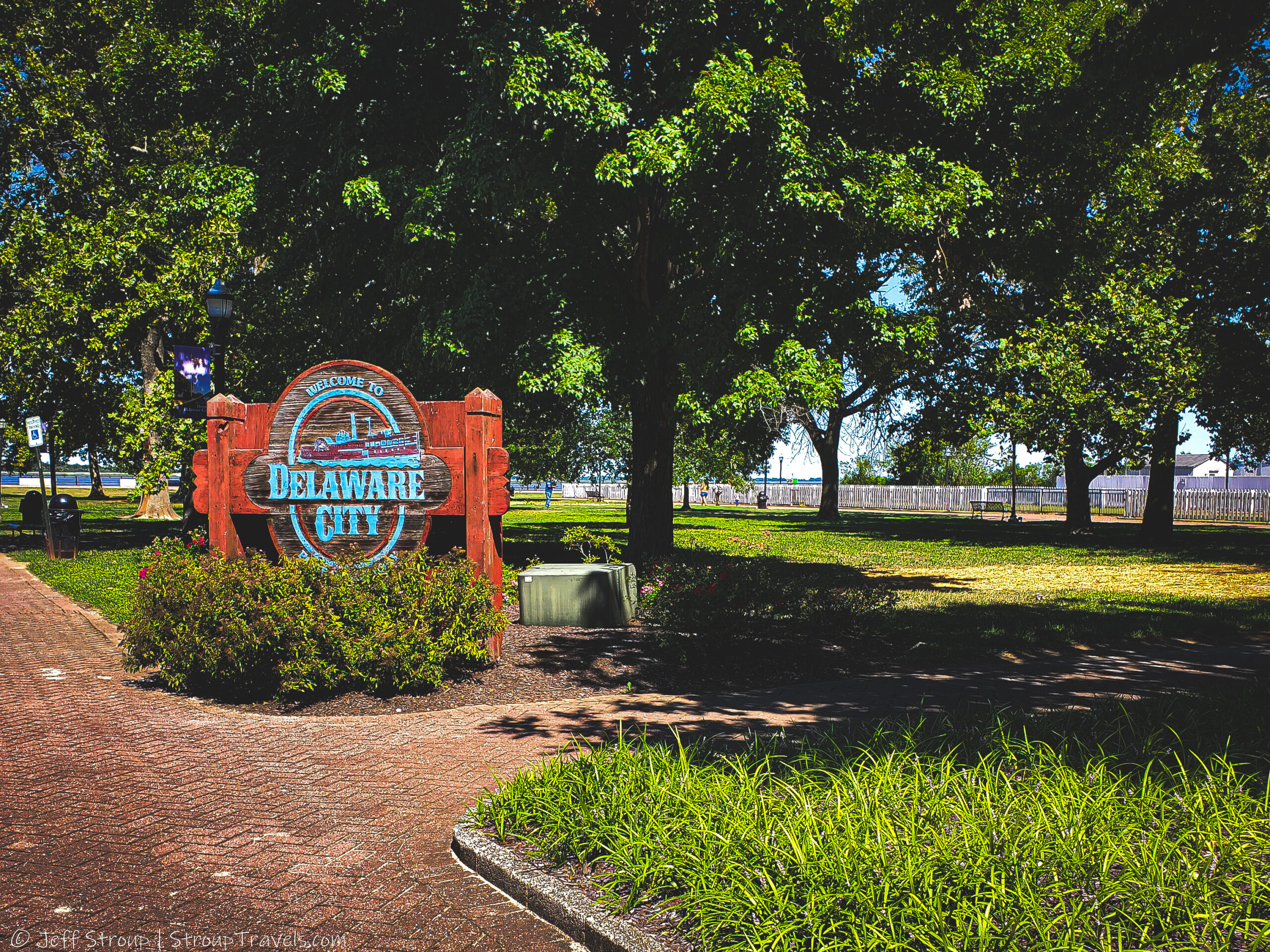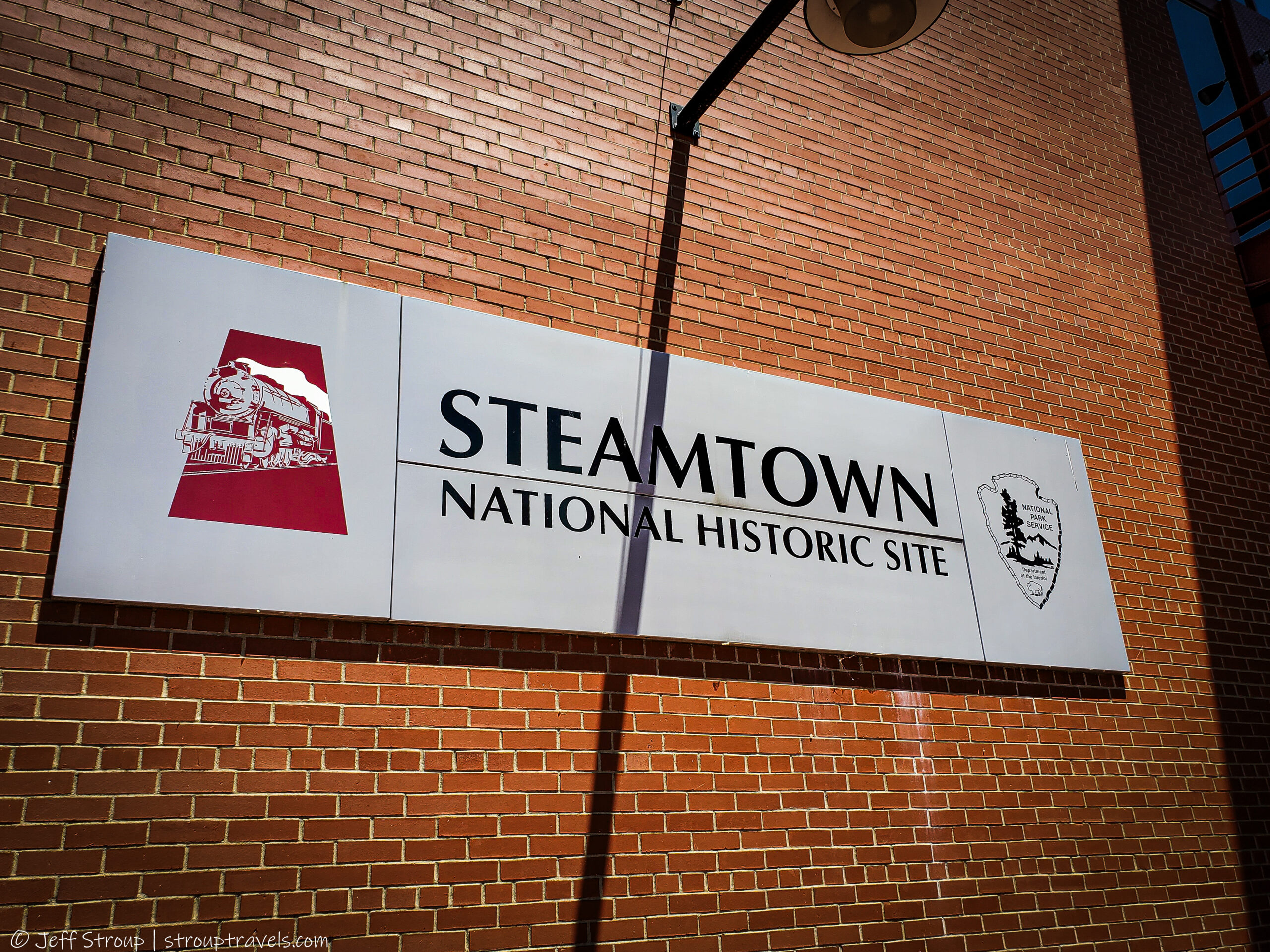
Located in Scranton, Steamtown National Historic Site sits right in the middle of the city, which makes it one of the more accessible national park sites you’ll come across.
Most people know Scranton from The Office.
But if you’re into history, trains, or checking off National Park Service locations, this is the real reason to stop.
Steamtown is essentially an open-air museum dedicated to American railroad history, built directly on a former rail yard. You’re not walking through a recreated exhibit. You’re standing in the actual space where it all happened.
What the Steamtown National Historic Site Actually Is
Steamtown isn’t a traditional national park with trails and overlooks. It’s industrial.
Rail yard tracks stretch across the property, lined with restored and aging locomotives from different eras. You can walk right up to them, see the scale, and understand how massive these machines actually were.
This place tells the story of the railroad industry during one of the most important periods in American history, the Industrial Revolution.
And it does it without overcomplicating things.
Steamtown National Historic Site: Walking Through Railroad History
As you move through the site, you’ll pass trains from different time periods, each representing a different phase of railroad development. Some are fully restored. Others show their age.
That contrast actually works in Steamtown’s favor.
You’re not just seeing polished museum pieces. You’re seeing what time does to these machines, which makes the history feel more real.
There are also indoor exhibits and a theater that help explain how railroads shaped the country. From moving goods to connecting cities, this wasn’t just transportation. It was infrastructure that built modern America.
Steamtown National Historic Site: The Rail Yard Experience
The rail yard is the core of the experience.
Tracks run in multiple directions, locomotives sit parked in different sections, and the layout still feels functional, because in many ways, it is.
This is an active site and that’s important to remember.
You’re not in a closed-off museum. You’re in a working environment that still operates in certain areas, so you need to pay attention to where you’re walking.
But that’s also what makes it better because it doesn’t feel staged.
Train Rides (Optional but Worth Considering)
One of the bigger draws here is the ability to actually ride a train.
This isn’t just a static museum. You can step onto a historic train and experience it in motion.
Ticket prices are reasonable, usually around $5–$6 depending on the ride.
If you’re into trains, it’s an easy yes.
If not, you’re not missing the core experience by skipping it.
Marketplace at Steamtown & Scenic Views
Right next to the site is The Marketplace at Steamtown.
It’s a quick add-on if you want food, shops, or just a break from walking the rail yard.
From here, you can also access a rail yard overlook, which gives you a better perspective of the entire site. Seeing the layout from above helps you understand just how large and functional this place really was.
It’s a small addition, but worth it.

How Long Do You Need at Steamtown National Historic Site?
Plan for about 2 to 3 hours.
That gives you enough time to:
- walk the rail yard
- check out the exhibits
- watch the short film
- optionally ride a train
You could stretch it longer, but most people won’t need more than that.
Getting Around Steamtown National Historic Site
This is one of the easier National Park sites to navigate. Parking is straightforward, the layout is open, and you can move at your own pace without feeling rushed.
Everything is relatively close together, which makes it easy to explore without overplanning your route.
Cost and Access
Entry to Steamtown is free. That alone makes it worth stopping.
Train rides are the only additional cost, and even those are relatively cheap compared to other attractions.
For a National Park site, this is one of the more accessible experiences out there.
Pairing This Stop With a Trip
We visited Steamtown on the way to the Thousand Islands region of New York, and that’s exactly how this place works best.
It’s not a destination you build an entire trip around.
It’s a stop that fits into a larger route.
Scranton itself has a few additional things to do, so you could stretch this into a short overnight or two-day trip if you really wanted to explore the area.
But most people will stop, explore, and move on.
Is Steamtown Worth Visiting?
Yes.
Even if you’re not a train enthusiast.
That’s the surprising part.
I’m not a big train guy, and it still held my attention. There’s something about seeing these machines up close and understanding their role in history that works, even if you didn’t come in expecting much.
Plus, if you’re collecting National Park passport stamps, this is an easy one to check off.
Who This Is For
This is a good stop if you:
- enjoy American history
- are visiting National Park sites
- want a low-effort, high-value stop
- are already passing through Scranton
Who Should Skip It
Skip it if you:
- have zero interest in history or industrial sites
- are looking for a high-energy attraction
- want something more immersive or interactive
Quick Questions
Is Steamtown National Historic Site free?
Yes. Entry is free. Train rides cost extra.
How long does it take to visit Steamtown?
Most visitors spend 2 to 3 hours.
Is Steamtown worth visiting if you’re not into trains?
Yes. The historical aspect carries the experience.
Stroup Verdict
Travel Time Worth It?
☆☆☆⭑⭑
Worth it if you’re passing through or pairing it with another trip
Time Needed:
2–3 hours
Crowd Tolerance Needed:
Low to Moderate
Photogenic?
Moderate
Would I Go Back?
Probably not
Who Should Skip It?
Anyone not interested in history or industrial sites
Final Thoughts
Steamtown isn’t flashy.
It’s not trying to be.
It’s a straightforward look at one of the most important periods in American history, built directly on the ground where that history actually happened.
You walk through it, take it in, grab your stamp, and move on.
Simple and sometimes that’s exactly what a stop like this needs to be.