Puerto Rico is not a polished resort island unless you deliberately stay inside a resort. This Puerto Rico Travel Guide is built for travelers who want the full island experience: colonial cities, rainforest mud, surf towns, caves, and long coastal drives. It’s humid, unpredictable, and incredibly varied. If you embrace flexibility, Puerto Rico delivers.
Driving counter-clockwise around the island is one of the cleanest ways to understand Puerto Rico. Start in the north with density and history, move west for surf and sunsets, swing south for architecture and heat, cut east for rainforest, then return to the metro zone. Each region feels distinct. The key is not trying to rush it.
Puerto Rico Travel Guide to San Juan
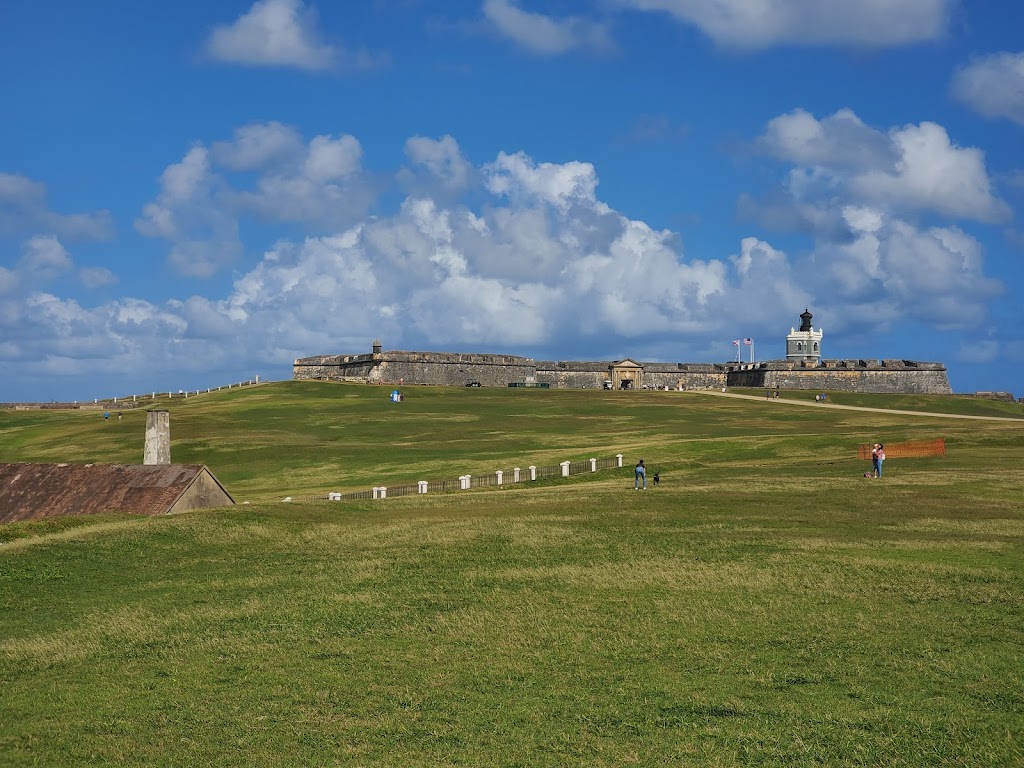
San Juan is compact and layered. Old San Juan feels closer to Europe than the mainland U.S., with blue cobblestone streets, tight alleyways, and pastel colonial buildings pressed against the Atlantic. Castillo San Felipe del Morro is worth your time, not because it’s a checkbox landmark, but because of scale. The ocean wind hits hard along the fort walls, and the views alone justify the stop.
You do not need a car in Old San Juan. In fact, it becomes a liability. Walking is easy. Scooters are everywhere. Parking is not. The city works best as a one- to two-day experience layered with food, fort walks, and evening wandering. It’s photogenic, busy, and alive. It’s also hot. Hydrate accordingly.
A full San Juan breakdown belongs in its own spoke, but at a state level, understand this: San Juan is energy and history compressed into tight streets. It’s not quiet, and it’s not slow.
Read the full breakdown: San Juan Puerto Rico: Forts & Old City Guide
Where to Eat in San Juan: Simple, Loud, and Worth It
San Juan has no shortage of restaurants, but not all of them are memorable. Old San Juan especially can lean tourist-heavy fast. If you want something casual, loud, and genuinely satisfying after walking fort walls all day, tacos hit differently in that humidity.
One place that stood out was Takería. It’s straightforward. No over-designed atmosphere. Just solid tacos that actually taste like someone cared when they made them. After hours of walking around Castillo San Felipe del Morro or climbing through Old San Juan streets, it’s the kind of spot that feels earned.
If you want the full food breakdown, I covered it separately here:
Takería: A Must-Try Restaurant for Taco Lovers in San Juan, PR
It’s not a fine dining experience and not trying to be. It’s just good, filling food in the right location.
And that’s usually what you need in San Juan.
Puerto Rico Travel Guide to Rincón
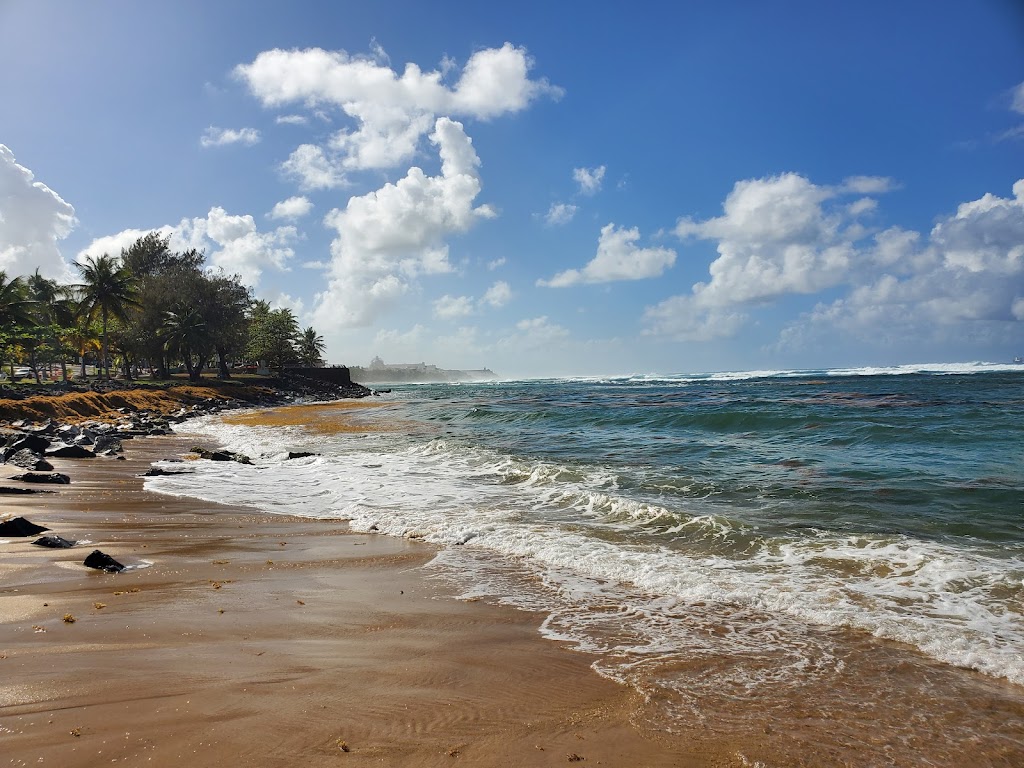
Rincón is the west coast contrast. The pace slows. The roads feel less urban. Surf culture defines the atmosphere, especially near Tres Palmas and Domes Beach. Sunset gatherings are common. Restaurants are more spread out. You feel the ocean more directly here.
Rincón is not packed with structured attractions. It’s a vibe town. You either lean into that slower rhythm or you feel like there’s “nothing to do.” If your trip needs energy and constant movement, you won’t get that here. If you want salt air, long horizon lines, and space to breathe, it works.
Driving from San Juan to Rincón is a reminder that Puerto Rico’s highways shift quickly from smooth stretches to rougher patches. Plan extra time. Assume nothing runs exactly on schedule.
Explore more: Rincón Puerto Rico: Surf Town Reality Check (coming soon)
Puerto Rico Travel Guide to Ponce
Ponce feels culturally distinct from the north. It’s known as “The Pearl of the South,” but what stands out is the architecture and density of history packed into a smaller downtown footprint. Colorful facades, historic plazas, and museums give it a grounded feel.
Ponce is less beach-driven than other regions. It’s hotter. Less tourist-saturated. More local. It works well as a half-day to full-day stop depending on how deep you go into museums and walking exploration. It does not have the coastal drama of the west or the rainforest mystique of the east, but it adds texture to the island loop.
Full guide: Ponce Puerto Rico Travel Guide: The Pearl of the South (coming soon)
Puerto Rico Travel Guide to El Yunque
El Yunque National Forest is the only tropical rainforest in the U.S. National Forest System, and it is not a manicured theme-park experience. Trails get muddy fast. Rain rolls in without warning. Visibility at overlooks can disappear in minutes.
Some trails are accessible and relatively straightforward. Others demand preparation. You need water, good footwear, and realistic expectations. If you go in assuming a clean, dry hike with guaranteed summit views, you will be disappointed. If you go in ready for humidity, slick rocks, and sudden weather shifts, it becomes memorable.
El Yunque is where Puerto Rico feels most alive and least controlled. That’s its strength.
Detailed breakdown: El Yunque National Forest Guide: What to Expect (coming soon)
El Toro Trail: Commitment Required
El Toro Trail deserves its own warning label. This is not a casual rainforest stroll. Knee-deep mud in sections. Eight-hour commitment. Physical and mental endurance required.
Reaching the peak does not guarantee a view. Clouds can roll in. Rain can hit. You need food, water, a first aid kit, and multiple light sources if you’re anywhere near dusk. The terrain is uneven and punishing in places.
It is rewarding, but only if you understand the cost. This trail is a separate spoke article for a reason. It’s not a general-interest hike. It’s a deliberate challenge.
Survival guide: El Toro Trail: 8 Hours of Mud and Reality (coming soon)
Arecibo and the North Coast: Science and Stone
Arecibo used to be synonymous with its observatory. Even after the telescope’s collapse, the site still carries weight. There’s something sobering about standing near what was once one of the world’s most significant radio telescopes.
Nearby, Cueva Ventana delivers one of the island’s most dramatic cave openings. The framed valley view from inside the cave is legitimately striking. This region leans geological and expansive rather than urban or beach-centric.
North coast stops feel heavier and more elemental. Less nightlife. More stone and sky.
Explore here: Arecibo and Cueva Ventana Travel Guide (coming soon)
Isabela
We based ourselves in Isabela while exploring the northern coast near Arecibo. This stretch of coastline is quiet, scenic, and much less crowded than some of the more tourist-heavy parts of Puerto Rico.
We stayed right on the beach at Bella Surf Inn, which was one of the more unusual hotel experiences of the trip. Our room door didn’t even have a handle. Just a lock. Strange setup, but the location made up for it. Walking outside and seeing the ocean right there was hard to complain about.
One of the highlights in town was dinner at Tsunami Restaurant, which sits along the coast and offers great ocean views while you eat.
While in the area we also visited Túnel de Guajataca, a historic railway tunnel that now serves as a scenic walkway to the beach.
More coming soon on Isabela.
San Germán
San Germán is one of the oldest cities in Puerto Rico and has a completely different feel from the coastal resort towns.
The historic district is filled with colorful buildings, old churches, and colonial architecture. We didn’t have as much time here as I would have liked, but walking around the historic area and visiting some of the churches gave a good glimpse into the town’s long history.
This is definitely a place I plan to revisit and explore more thoroughly.
A full San Germán travel guide is coming soon.
Mayagüez
Mayagüez is one of the larger cities on the west side of the island and offers plenty of things to do if you plan to stay longer.
We didn’t spend much time here during this trip. We mostly drove through the city and stopped briefly at one of the parks before continuing our drive along the coast.
Based on what we saw, Mayagüez feels like a place where you could easily spend a few days exploring museums, parks, and waterfront areas.
More exploration here will definitely happen on a future trip.
Cabo Rojo
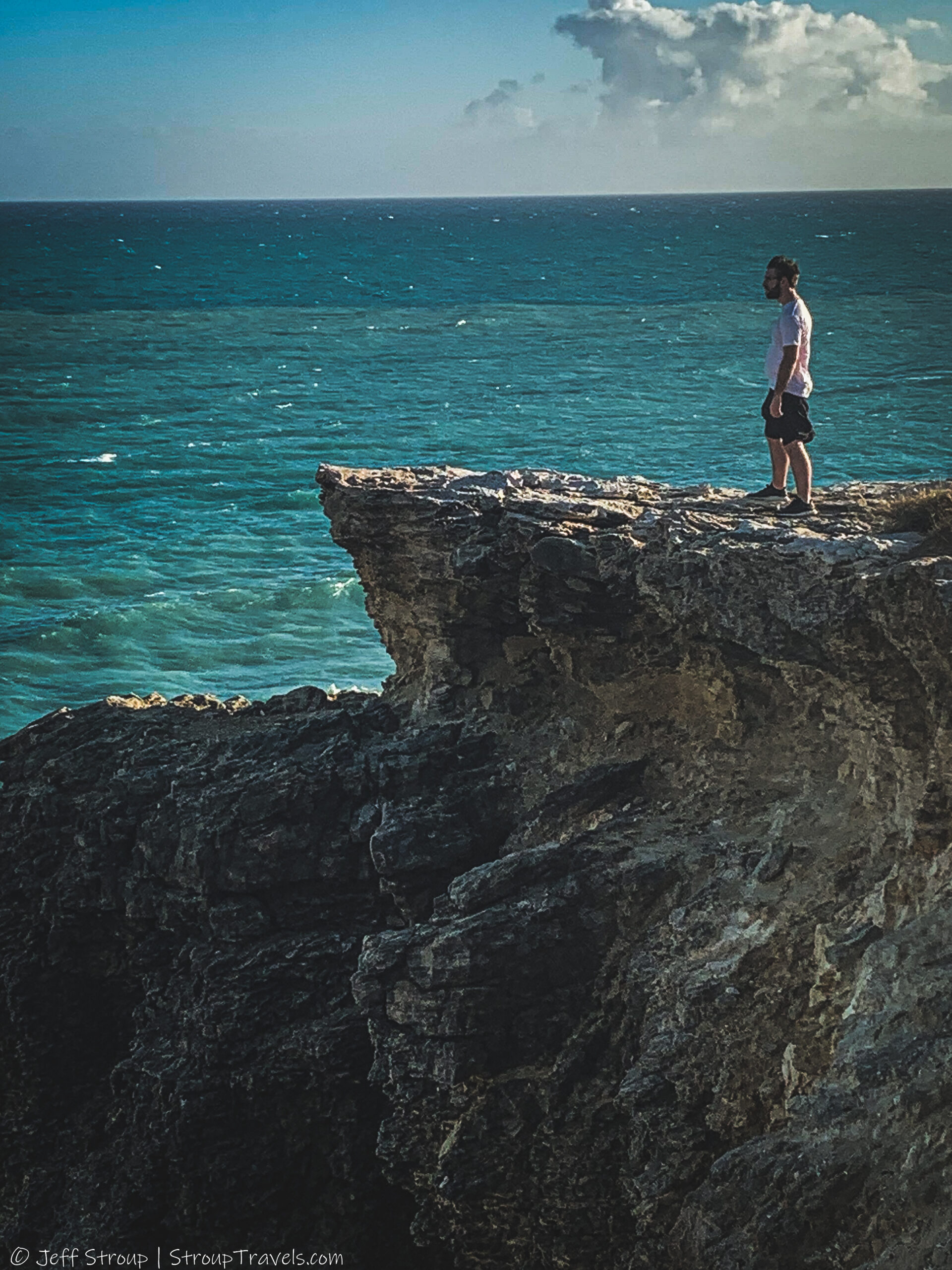
Cabo Rojo was one of the most visually impressive stops of the trip.
The main highlight here is Faro Los Morrillos, the historic lighthouse sitting on dramatic limestone cliffs overlooking the ocean.
Walking the trails around the lighthouse gives you incredible views of the coastline. Just west of the overlook sits a beautiful beach tucked into a cove below the cliffs.
It can get extremely windy up here, and the drop-offs near the cliffs are no joke, so it’s not a place to get careless near the edges. Still, the views alone make this one of the most memorable stops on the island.
Patillas
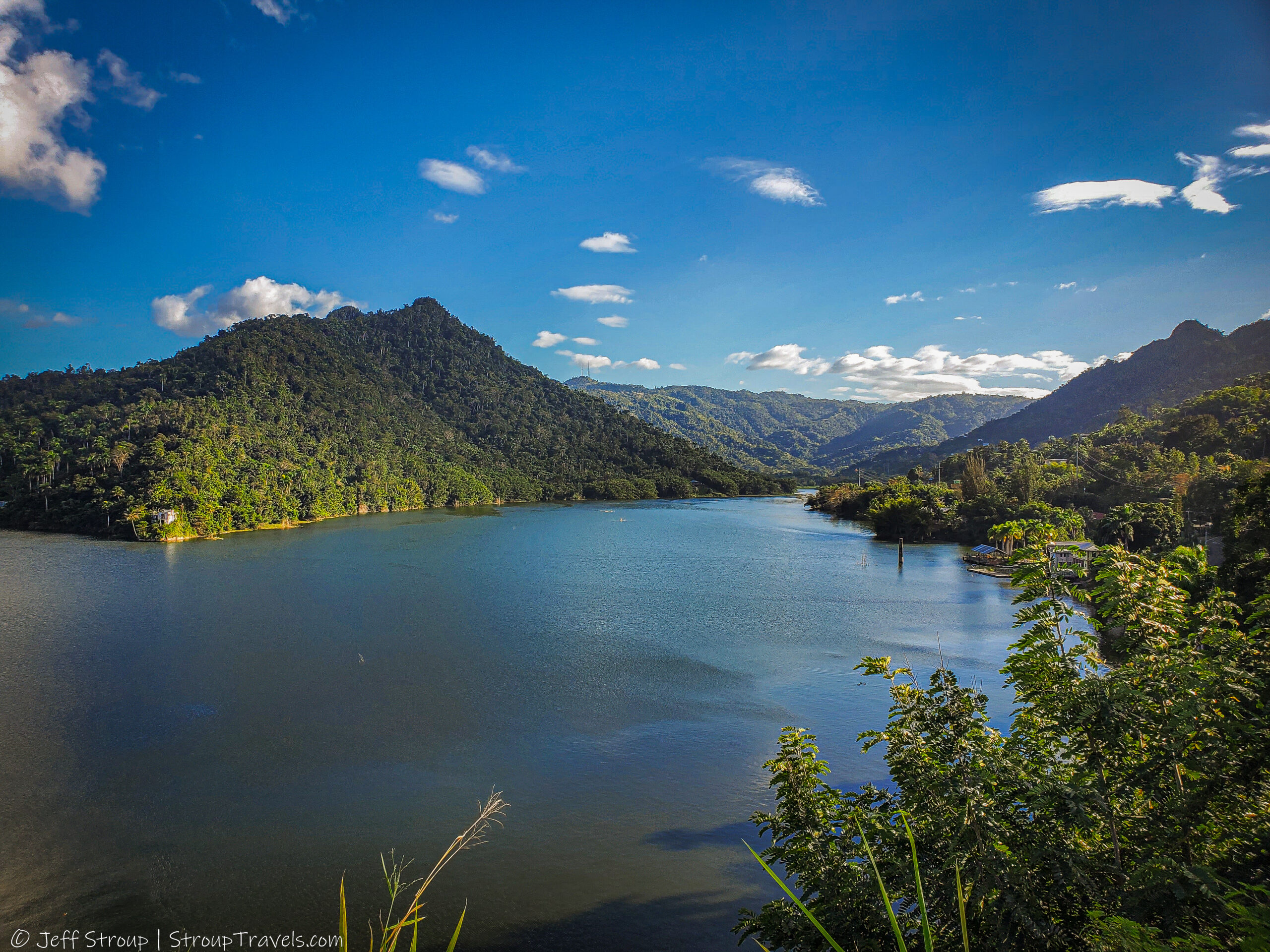
Driving Route 184 near Patillas takes you through the mountains of Puerto Rico where the scenery changes quickly from coastal views to dense forest and winding roads.
Along the way we stopped at Charco Azul, a small river pool surrounded by jungle-like terrain. I don’t remember every detail about the stop, but it was a nice place to pull over, stretch your legs, and take in the natural surroundings.
This area is known for its roadside food stands and mountain scenery, making it a popular drive for locals and visitors alike.
Humacao
We passed through Humacao during our drive across the island but didn’t spend enough time there to properly explore.
The area is known for beaches and nature reserves, so it’s definitely somewhere worth returning to on a future visit to Puerto Rico.
Fajardo
Fajardo serves as a gateway to some of Puerto Rico’s most popular coastal experiences, including boat trips, island excursions, and access to nearby nature reserves.
We used Fajardo as a stopping point while moving along the northeastern part of the island.
Las Croabas
Just outside Fajardo sits Las Croabas, a coastal area known for its seafood restaurants, ocean views, and access to nearby islands.
While here we visited Playa El Convento and ended up splurging a little on a stay at El Conquistador Resort. We spent about two days relaxing there before heading back toward San Juan.
The resort sits high above the coastline and offers incredible views of the surrounding ocean. Not a bad place to spend Valentine’s Day.
Orocovis
While driving through the mountains near Orocovis, we spotted a small roadside waterfall tucked along one of the narrow winding roads.
It looked like the kind of place where locals probably know exactly where to stop and explore the water. For visitors like us, though, it was tricky. The road curves sharply and there isn’t much space to safely pull over unless you know the area well.
Still, it’s one of those unexpected roadside sights that makes driving through Puerto Rico interesting.
Coabey
One of the more unusual stops was Museo El Cemí in Coabey.
It’s a small museum, but it’s a nice place to get out of the car, stretch your legs, and learn a bit about local culture and history. One of the more memorable parts was the giant oversized chair outside, which makes for a fun photo stop.
You can easily see everything here in about an hour.
Driving Puerto Rico: Freedom and Friction
If you plan to leave San Juan, rent a car. It’s not optional if you want full island flexibility. Roads range from modern highways to narrower, winding rural routes. Potholes exist. Signage can be inconsistent. GPS helps, but downloading offline maps is smart insurance.
Driving here is not sterile. It requires attention. But it also gives you access to the full geographic range of the island, which is the entire point.
What Puerto Rico Does Well
Puerto Rico excels at contrast. You can stand in colonial history, hike through rainforest, watch surfers, explore caves, and end the day with coastal sunset views without needing a passport. Cultural identity is strong. Natural variety is legitimate.
What It Doesn’t Do Well
It does not offer predictability. Infrastructure consistency varies. Weather refuses to cooperate on command. If you need rigid scheduling and guaranteed outcomes, this island will frustrate you.
Traveler’s Checklist: Puerto Rico Travel Guide
Rent a car for island-wide exploration. Choose wisely. Roads get quite small the further inland you go.
Download offline maps before leaving metro areas
Hydrate constantly, humidity is real
Budget extra time for drives
Expect weather shifts in the rainforest
Respect trail difficulty ratings
Build 5–7 days minimum for a full island loop
Puerto Rico rewards preparation more than spontaneity.
Q&A: Puerto Rico Travel Guide
Is Puerto Rico worth visiting?
Yes. Especially if you want tropical scenery without needing a passport. The variety per square mile is impressive.
How many days do you need in Puerto Rico?
Five to seven days minimum if you plan to circle the island without rushing.
Is driving in Puerto Rico safe?
Yes, but expect potholes, inconsistent signage, and occasional confusion. Stay alert and use offline navigation backups.
Is El Yunque difficult?
Some trails are easy. El Toro Trail is not. Choose based on experience and weather.
Is San Juan enough for a full trip?
San Juan works for a few days, but you miss the island’s diversity if you don’t leave the metro area.
Stroup Verdict
Drive Time Worth It: ★★★★★
Time Needed: 5–7 days minimum
Crowd Tolerance: Moderate to high in metro areas
Photogenic: Extremely high
Would I Go Back: Yes
Who Should Skip: Travelers who need perfectly controlled environments
Puerto Rico rewards travelers who embrace friction. If you want tropical scenery without surrendering structure entirely, it delivers. If you expect seamless resort polish across the entire island, adjust your expectations.