There’s quiet, and then there’s Shiloh quiet.
The kind of silence that feels like the air’s been holding its breath for 160 years. The Shiloh National Cemetery isn’t just another stop on the battlefield, it’s the part that hits the hardest. The place where all the noise finally stops.
This isn’t the kind of cemetery you breeze through. It’s one that makes you pause mid-step because the weight of history here isn’t subtle, it’s screaming through the stillness.
Shiloh National Cemetery: Walking Among the Fallen
The cemetery sits above the Tennessee River, overlooking the same water that carried the wounded and dead after the Battle of Shiloh in 1862. Over 3,500 soldiers rest here, most of them Union, with two-thirds never identified.
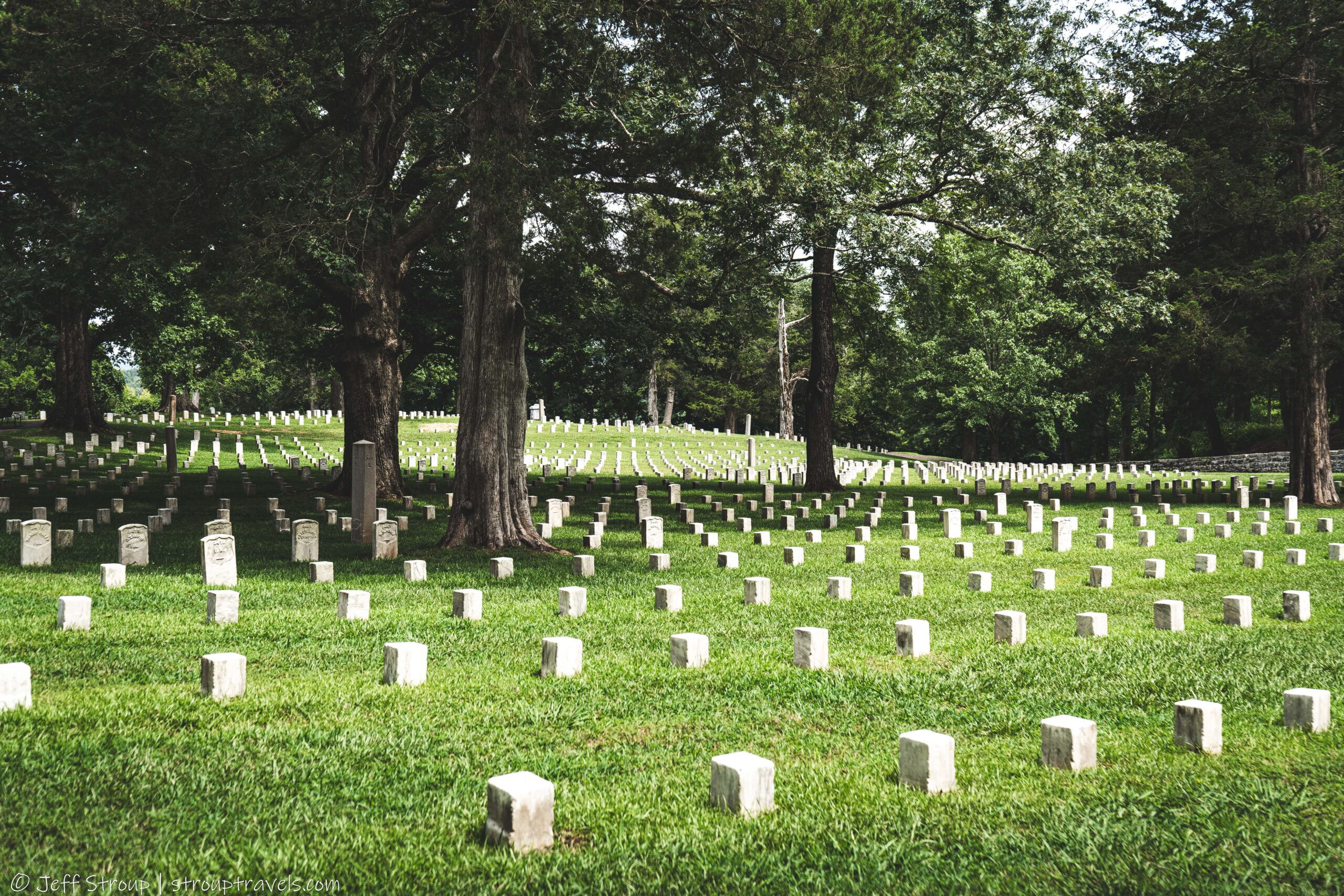
Rows of white markers stretch into perfect order, an image so peaceful it almost feels staged. But when you stop to read the words “Unknown Soldier,” again and again, it punches you in the gut. Every one of those stones represents someone’s everything, reduced to nothing more than “unknown.”
A Battlefield Turned Memorial
Before it became a cemetery, this land was chaos. Blood, mud, smoke, and screams, Shiloh was the first major battle in the Western Theater of the Civil War. It shocked the country. People thought the war would be quick and clean. Then Shiloh happened, and the illusion shattered.
In 1866, the U.S. government turned the site into a national cemetery, one of the first ever created. They gathered remains scattered across the battlefield, men found in shallow graves, ditches, and mass pits.
So yeah, when people say Shiloh National Cemetery feels heavy, it’s because it literally is.
Shiloh National Cemetery: The Weight of Stillness
Standing in the middle of the cemetery, you notice how damn perfect everything looks, trimmed grass, clean markers, flags fluttering gently. It’s beautiful, but it’s not peaceful. You feel the stories beneath your feet. You start thinking about the noise this place once held, gunfire, pain, chaos, and how all that turned into this unnatural calm.
I don’t care how many Civil War parks you’ve been to, this one hits different. It’s not about the cannons or monuments. It’s about the silence that follows them.
Traveler’s Checklist: Shiloh National Cemetery
✅ Free entry, open daily from sunrise to sunset
📍 Located within Shiloh National Military Park, near the visitor center
🎖️ Roughly 3,584 graves — about 2,300 unidentified
🕊️ Union soldiers only; Confederate soldiers buried elsewhere in local cemeteries
👟 Wear comfortable shoes; the slope to the river overlook is steep
🚗 Parking available near the main gate
📘 Get your National Parks Passport Book stamped inside the visitor center
📸 Photography allowed, but keep it respectful
Know Before You Go
This is a cemetery first, and a tourist stop second. You’ll likely be one of only a handful of visitors there. It’s quiet, but not empty. The place hums.
Come during early morning or late afternoon when the light softens, it feels more like reflection than sightseeing.
If you’re bringing kids, explain what it is before you get there. It’s not Disneyland. It’s death, discipline, and duty all carved into marble.
Final Thoughts: The Voices Beneath the Ground
I’ve stood in a lot of historic places, but the Shiloh National Cemetery is one that stays with you. It’s not about grandeur or crowds, it’s about presence. You feel like you’re being watched, not in a creepy way, but in that quiet, heavy way that says, “We were here. Don’t forget that.”
When you leave, you don’t feel relief, you feel gratitude.
That’s what makes this place so haunting. The dead don’t speak, but damn, they’re still heard.
Real Questions People Ask About Shiloh National Cemetery
Q: Who’s buried at Shiloh National Cemetery?
A: Over 3,500 Union soldiers, mostly from the Battle of Shiloh. About two-thirds are unknown. Confederate soldiers were buried elsewhere.
Q: Can you visit Shiloh National Cemetery at night?
A: Nope. The gates close at sunset, and honestly, you wouldn’t want to. It’s somber enough during the day.
Q: Is it worth visiting if I’ve already seen the battlefield?
A: Absolutely. The battlefield tells the story. The cemetery makes you feel it.
Q: Are there tours?
A: You can walk it yourself or use the NPS self-guided brochure. Guided ranger tours occasionally cover it in season.
Q: Is photography allowed?
A: Yes, just be discreet. No posing on graves, no filters — let the raw emotion carry it.
Related Reading:
👉 Shiloh National Military Park: Raw, Real, and Hauntingly Unfiltered
👉 Walking the Trails of Shiloh: Where History and Haunting Silence Collide